UnderdogRun

UnderdogRun

Understand Knowledge. Explore Civilization.

There are no heroes in civilization—only underdogs who kept running, stumbling, and moving it forward.

RSS

Recent Posts

View all

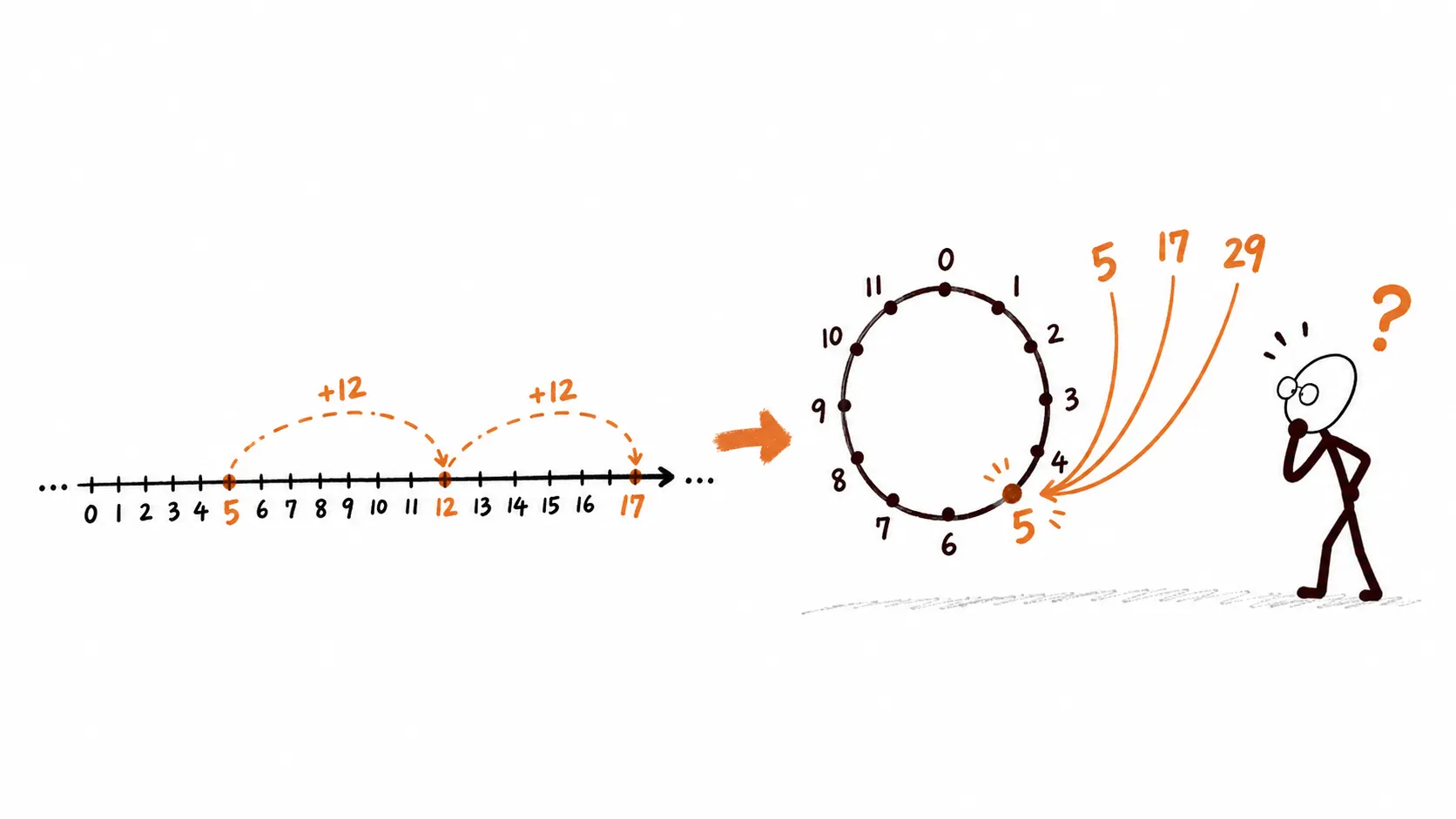
Article | What Is Modular Arithmetic? Why Can 17 and 5 Be “Equal”?

Modular arithmetic is a mathematical system that allows us to understand integers through the idea of “cycles.” Why can 17, which clearly is not equal to 5, be written as 17 ≡ 5 (mod 12)? Starting with clocks and remainders, this article explores congruence, residue classes, and the mathematical ideas behind the symbol “≡”, and shows how a seemingly simple symbol can open the door to a whole new world of modern mathematics.

MathematicsMathematical SymbolsModular ArithmeticCongruence

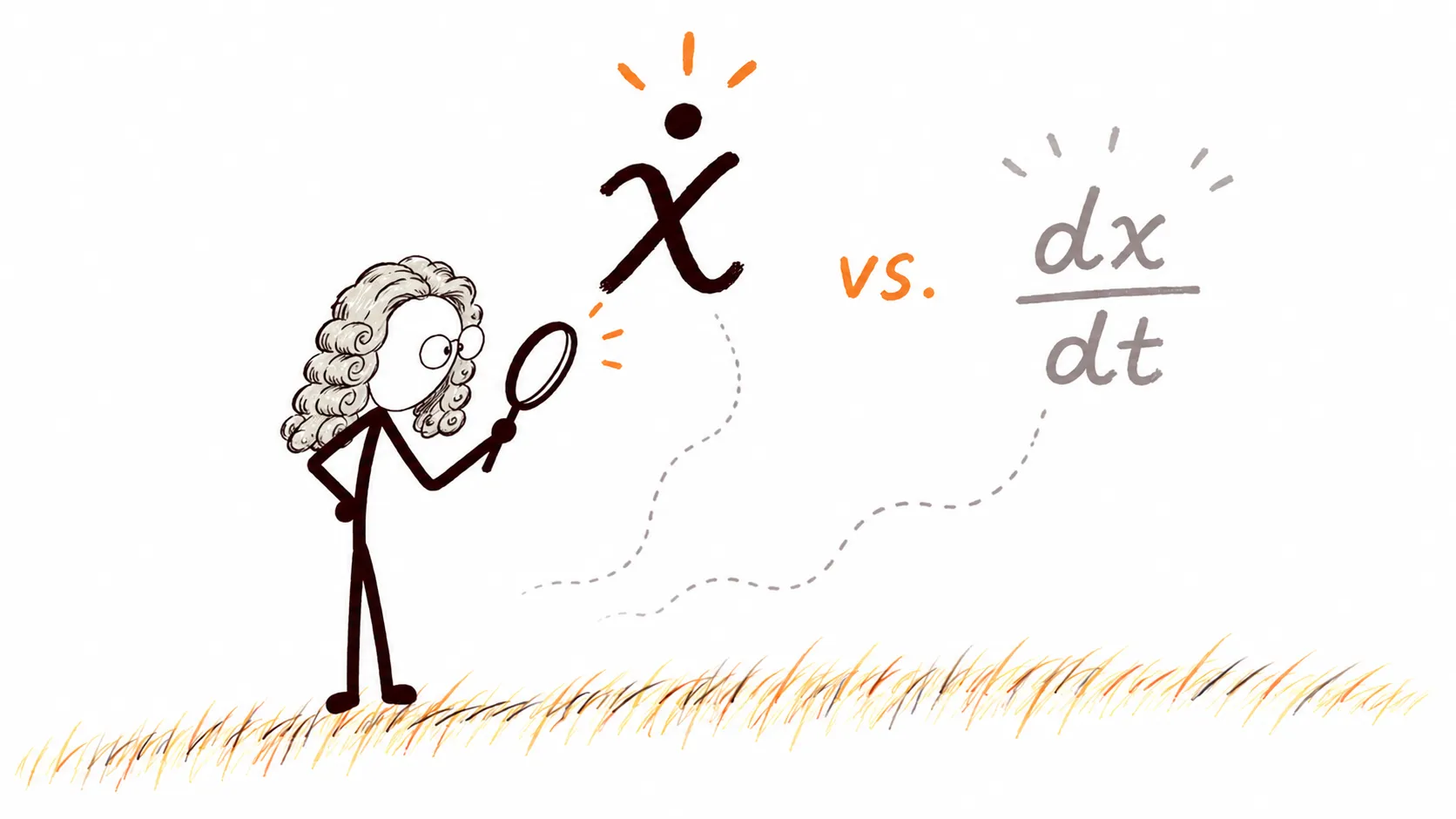
Article|Newton’s Method of Fluxions: What Did Calculus Look Like Before Leibniz’s Notation?

Before Leibniz’s dx/dy and integral notation became the standard language of calculus, Newton used a very different way to describe change. This approach, known as the method of fluxions, raises a fascinating question: what did it actually look like? Let’s return to the birth of calculus and see how mathematicians tried to capture change in the world before they had the symbolic language we use today.

MathematicsHistory of MathematicsCalculusNewton

Article | Why Did Ancient Egyptians Guess the Answer First? — The Idea Behind the Method of False Position

Four thousand years ago, the ancient Egyptians had neither unknowns nor an equals sign, yet they were able to solve problems that would require equations today. They first guessed a number that was easy to work with, then repeatedly adjusted it using proportions. This was the method later known as the Method of False Position. More intriguingly, this idea of gradually approaching an answer from an initial starting point has a connection to modern numerical computation that spans thousands of years. Starting with an ancient Egyptian mathematical problem, this article explores the mathematical thinking behind the Method of False Position, and how humanity gradually moved from working with specific numbers toward studying relationships between quantities—the foundation of modern algebra.

MathematicsHistory of MathematicsAncient EgyptMethod of False Position

Article | What Is a Unit Fraction? Why Didn't the Ancient Egyptians Use Ordinary Fractions?

Why did the ancient Egyptians rarely use the ordinary fractions we take for granted today? Instead, they expressed almost every fraction as a sum of unit fractions—a seemingly cumbersome system that shaped Egyptian mathematics for thousands of years. This article explores what unit fractions are, why they became the foundation of Egyptian mathematics, the way of thinking behind them, and why they were eventually replaced by the modern fraction notation we use today.

MathematicsFractionsAncient EgyptRhind Mathematical Papyrus